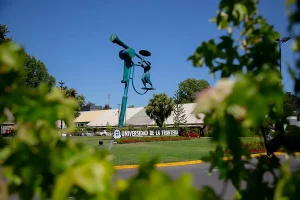

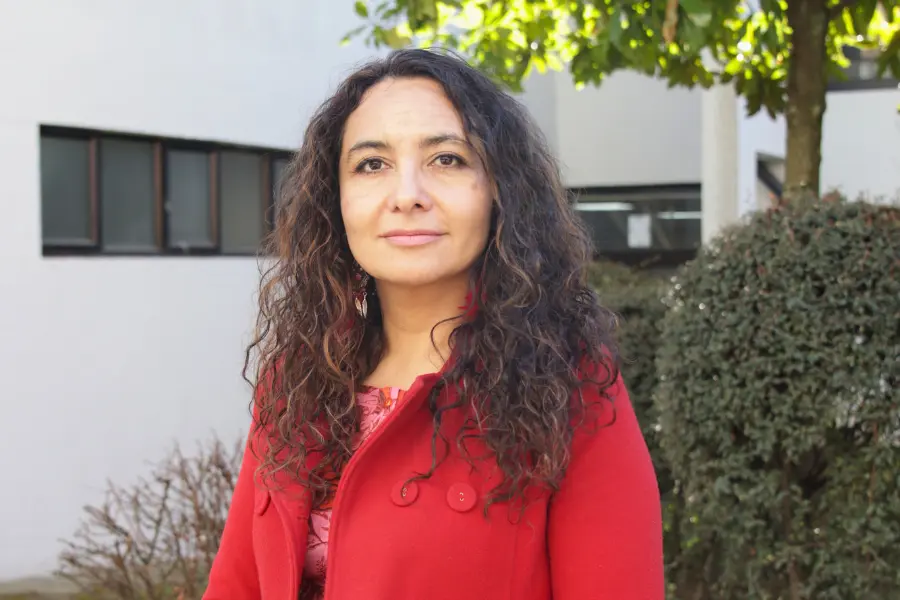
Dr Ana Bustamante Mora, academic at the Department of Computer Science and Informatics within the Faculty of Engineering and Sciences at the Universidad de La Frontera (UFRO), leads one of the projects selected in the 2025 call of the Chile–Mexico Joint Cooperation Fund, administered by the Chilean Agency for International Development Cooperation (AGCID) and the Mexican Agency for International Development Cooperation (AMEXCID).
The project, entitled ‘Weaving economies for equality: Intercultural laboratory for Social and Solidarity Economy (SSE) projects’, will be carried out jointly with the Universidad Intercultural para la Igualdad de Aguascalientes (Mexico) and was selected among 13 funded initiatives. Its main objective is to strengthen bilateral cooperation between both countries and to promote development with a gender equality and social inclusion perspective through the incorporation of technologies.
As Dr Bustamante explained, ‘this proposal aligns with the action lines of the Chile–Mexico cooperation fund which, since its creation in 2006 under the government of Ricardo Lagos, has maintained an uninterrupted trajectory of international collaboration, as well as with goals associated with the Sustainable Development Goals (SDGs)’.
In the Chilean context, this project aligns with the strategic objectives of the 2022–2026 Government Programme and the Fourth National Plan for Equality between Women and Men 2018–2030, contributing to the strengthening of a sustainable and inclusive territorial development model, with an emphasis on gender equality and social participation. The initiative includes joint funding of up to USD 250,000, directed exclusively to public institutions, with the possibility of incorporating private partners, foundations or community organisations.
‘Through this initiative, we aim to advance the economic autonomy of women in rural areas by fostering community leadership, encouraging technological adoption and contributing to the reduction of structural gender gaps, in line with the presidential priority of mainstreaming a gender perspective in public policies’, the academic noted.
Team and strategic partnerships
In addition to the internal UFRO research team—comprising Dr Carlos Cares Gallardo, Dr Millaray Curilem Saldías, Ms Florencia Riquelme Loyola, Dr Adrialy Muci Núñez, Mr Eduardo Uribe Sepúlveda, Dr Jaime Díaz Arancibia, Dr Ania Cravero Leal and Ms Janina Hanswillemenke—the project is supported institutionally by the Universidad de Los Lagos, through Dr Mirna Liliana Brauning Wistuba, as well as by the Regional Ministerial Secretariats of Women and Gender Equality in the regions of La Araucanía and Los Lagos, and the Regional Government of La Araucanía, among other key partners.
Over the two-year implementation period, the team will carry out joint actions with rural communities in Chile and Mexico, aimed at promoting technology transfer, training in digital tools, knowledge appropriation and the development of social economy micro-enterprises. The project will also strengthen academic and territorial exchange between teams from both countries through the generation of shared learning, experiences and capacities.
‘This intercultural laboratory will serve as a space for the creation and strengthening of binational networks, where we expect to establish sustainable and collaborative local capacities’, stated Dr Ana Bustamante.
Written by Daphne Bormann
Faculty of Engineering and Sciences