
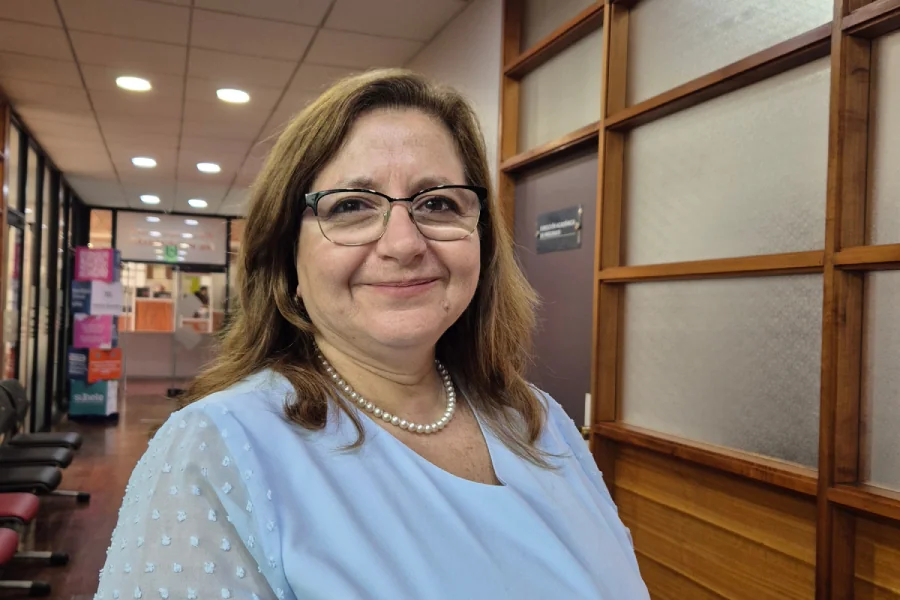
With a distinguished career and international recognition, Dr Sheyla Blumen is a widely cited researcher and expert in the fields of cognitive assessment, cultural relevance and high abilities. She serves as Head of the Department of Psychology at the Pontificia Universidad Católica del Perú and recently undertook an academic visit to the Universidad de La Frontera (UFRO), within the framework of Fondecyt Initiation Project No. 11230429, led by Dr Marcela Rodríguez of the Department of Psychology at UFRO. The project is entitled ‘Exploration of the fairness of the Wechsler Intelligence Scale for Children, Fifth Edition, Chilean standardisation (WISC-V): a contribution to fair and culturally relevant cognitive assessment’.
As a specialist in psychological, psychoeducational and neuropsychological assessment, Dr Blumen has worked with populations experiencing high levels of vulnerability linked to multicultural contexts. During her visit, she emphasised the importance of considering context in cognitive assessment processes. As she explained, the interpretation of results must take into account multiple dimensions of the environment in which the child or adolescent develops, including family, school, cultural factors, community and even the educational regulations of the country in which they live.
‘It is not the same to assess a child from a rural area, whose family has never had access to quality primary education, as it is to assess one from a more privileged socio-economic background, with parents who have had greater educational opportunities’, she noted. She added that the same result may have different interpretations depending on the context, which makes it essential to understand the environment surrounding each child or adolescent.
Challenges for education systems
When asked about the challenges faced by education systems in this regard, she highlighted the need to respond to students with highly diverse needs. While some experience learning difficulties, others demonstrate high abilities or talents that require differentiated educational processes, for example, faster-paced or more in-depth approaches. ‘It is not sufficient to provide them with an enrichment programme alone; it is also essential to offer socio-emotional support that respects the way these students think and feel.’
How, then, can universities contribute to addressing these challenges? For Dr Blumen, higher education institutions play a fundamental role as centres of knowledge generation. Through research, they are able to propose innovative strategies to improve educational quality and also influence public policy.
Regarding Chile, the researcher noted significant progress in this area. ‘There is a network of university programmes focused on the development of academic talent, such as the UFRO Educational Programme for Gifted Children and Young People — a team with which I had the opportunity to meet — which carries out highly relevant work with students from different territories, including Mapuche communities.’
In this context, she highlighted that universities can develop support programmes for talented students from vulnerable backgrounds. ‘At the Pontificia Universidad Católica del Perú, a programme was created for young people with high abilities that provides financial support as well as mentoring, connecting them with individuals who have excelled in their respective fields and can serve as strong role models.’
International engagement
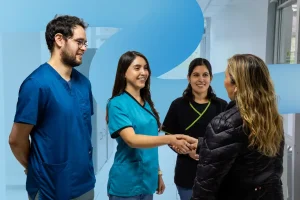
During her stay, Dr Sheyla Blumen and Dr Marcela Rodríguez held a working meeting with the Director of the International Office at UFRO, Dr Víctor Beltrán, and the Coordinator of International Cooperation, Janina Hanswillemenke. The meeting addressed opportunities for international academic engagement, particularly with a view to implementing courses using the COIL (Collaborative Online International Learning) methodology, as well as potential research lines.
In this way, academic links with the international expert form part of the collaborative actions promoted through the Fondecyt project, contributing to the strengthening of research networks and the development of culturally relevant approaches in the field of cognitive assessment.
Jassna Sepúlveda Beltrán
UFRO International Office