
A forum for reflecting on the challenges and opportunities presented by digital health was held at the Universidad de La Frontera (UFRO) as part of the International Conference on Telehealth in Rural and Intercultural Populations. The event provided an opportunity to share experiences from Brazil and Chile while advancing international academic cooperation in this field.
The conference was organised within the framework of Project FRO 2495, entitled ‘An Integrated Tele-dentistry Technology Ecosystem to Deliver General and Specialist Dental Care for Older Adults’. The event also welcomed a Brazilian delegation, strengthening academic cooperation between UFRO and the University of São Paulo (USP), as well as collaboration with Brazil’s Ministry of Health through the Secretariat for Information and Digital Health. The Secretary for Information and Digital Health, Dr Ana Estela Haddad, joined the conference remotely and contributed to the discussions.
The keynote lecture, entitled “Challenges of Telehealth in Latin America: Perspectives Based on Brazil’s Digital Health Model”, was delivered by Dr Celso Zilbovicius and Dr Camila Huanca, representing Brazil’s Secretariat for Information and Digital Health. They outlined the country’s digital transformation in healthcare, highlighting the particular challenges associated with Brazil’s vast geographical and demographic scale.
“Following the pandemic, it became clear how digital health can benefit more remote areas where access to healthcare is more limited. This is a movement that must be integrated across multiple dimensions, from healthcare management to professional education. There are many challenges in this field, but they can be overcome through both short- and long-term planning in order to achieve comprehensive progress while always focusing on the care of those who need it most. Integrated and secure information systems are essential”, said Dr Camila Huanca, who is also a researcher at the Telehealth and Tele-dentistry Centre at USP.
Digital health and education
Dr Celso Zilbovicius, who is also a researcher at USP, highlighted the importance of embedding telehealth within educational programmes. “It is essential to educate professionals who are able to integrate digital health into clinical practice so that care and healthcare delivery can be improved, particularly for populations living further away from major urban centres”. He added that students should have opportunities to experience the realities of different territories first-hand: “They need to go into communities, understand their needs and see how digital health can help improve care”.
The conference also featured a panel discussion moderated by Dr Raúl Sánchez, director of the UFRO Centre for Translational Medicine, which explored perspectives on telehealth and examined the challenge of advancing technology-supported models of care, particularly in rural areas and communities with limited access to healthcare services. In this context, Dr Deise Garrido, a researcher at the Faculty of Dentistry at USP, stressed that working with students is fundamental to expanding both interest and expertise in this field. “Sharing the experiences we are gaining and the projects we are developing allows us to demonstrate what we can achieve together and encourages young people to engage with digital health”.
Telehealth in practice
The programme also included a presentation by Dr Leonardo Santander, head of the Clinical Management Department at Dr Hernán Henríquez Aravena Regional Hospital and director of UFRO’s Internal Medicine Specialty Programme. He shared the hospital’s experience of improving patient care through the use of digital technologies.
“The world is changing; the resources available and the way medicine is practised today are very different from those of five, ten or twenty years ago. This requires us to continually adapt and keep pace with emerging technologies and with patients’ evolving expectations”, he said. He also highlighted the importance of international cooperation in addressing shared challenges. “Knowledge is not confined to one place; it is created collaboratively. Partnerships allow us to grow and to learn how others have addressed the same challenges that we face”.
Telehealth in La Araucanía
Representing UFRO, Dr Víctor Beltrán, director of Project FRO 2495 and Associate Professor in the Faculty of Dentistry, together with Dr Leonardo López from the Institute of Educational Informatics, presented progress made through the University’s telehealth initiatives, focusing on older adults and rural communities across the La Araucanía Region.
Dr Beltrán explained that, even before Project FRO 2495, UFRO had already implemented a range of telehealth initiatives, including projects developed during the COVID-19 pandemic with funding from ANID, the Presidential Grant Programme and the Regional Government. These initiatives have enabled the development of research in telehealth, focusing on barriers to healthcare access, particularly for rural populations and Mapuche communities.
The current project seeks to integrate clinical, technological, community and territorial capabilities in order to address local healthcare needs, prioritise referrals and facilitate access to specialist dental and medical care. Geographically, the initiative has covered the municipalities of Angol, Carahue, Curarrehue, Lonquimay, Pucón, Temuco and Teodoro Schmidt. Institutional support has been instrumental to its development, including that of Regional Councillor Mónica Rodríguez, who also attended the event.
“Our focus is on how to bring specialist healthcare services to places where access remains most limited”, Dr Beltrán explained.
Through this innovative telehealth ecosystem developed at UFRO, the University has advanced patient care, professional training and remote monitoring while incorporating technologies developed in-house, including a secure cloud-based web platform.
International cooperation
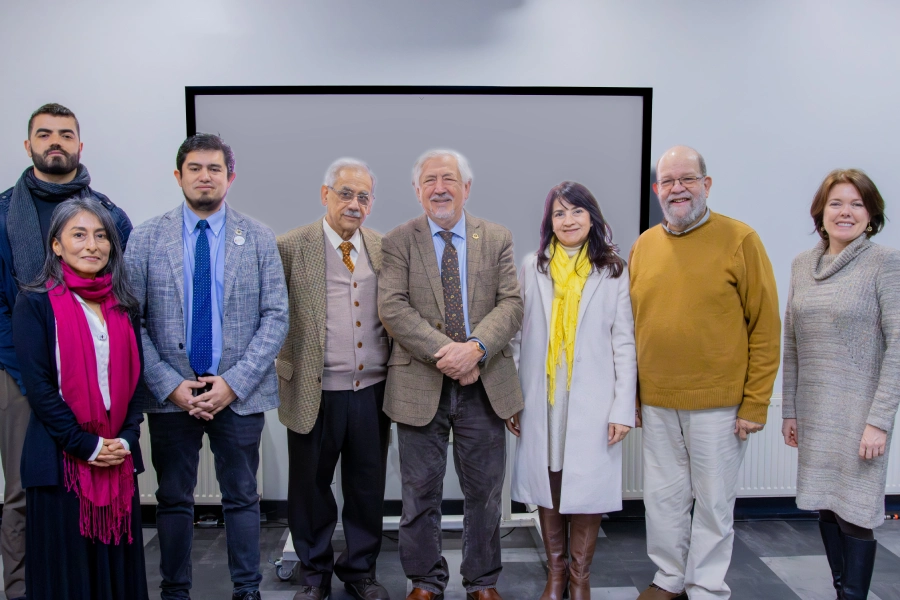
The Brazilian delegation included Dr Deise Garrido, Dr Celso Zilbovicius, Dr Camila Huanca, Dr Andrea Melani and predoctoral researcher Matheus Ribeiro.
As part of the programme, the delegation also participated in an online meeting featuring presentations by Dr María José Letelier, Head of the Department of Digital Health at Chile’s Undersecretariat of Healthcare Networks, and Dr Carolina del Valle from the Department’s Digital Hospital Unit.
While in La Araucanía, the delegation also visited the Padre Las Casas Healthcare Complex, where they were welcomed by its director, Heber Rickenberg, and deputy medical director Dr Mylene Rogazy to learn about the intercultural healthcare model developed at the institution. The visit also provided an opportunity to explore future collaborative initiatives and lay the foundations for a long-term partnership.
The Brazilian specialists also met with the Mayor of Temuco, Roberto Neira, exchanging experiences from Brazil alongside initiatives implemented by the Municipality of Temuco in the field of healthcare. Discussions also explored opportunities for future exchanges of good practice and expertise.
Among the next international cooperation initiatives, UFRO and USP are planning the joint establishment of a UFRO–USP Chair in Telehealth, creating new opportunities to strengthen education and capacity building in this strategic field.
Read the related article
NuTes-DigiLab/FOUSP Participates in an International Academic Mission at the Universidad de La Frontera, Chile
International Office
Communications Office