
With a view to establishing new opportunities for international collaboration in academic, innovation, entrepreneurship and student development domains, an academic delegation from the Universidad de La Frontera undertook an intensive programme of work at the Universidade de São Paulo (USP), one of the leading higher education institutions in Latin America.
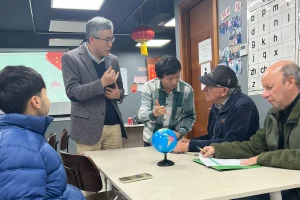
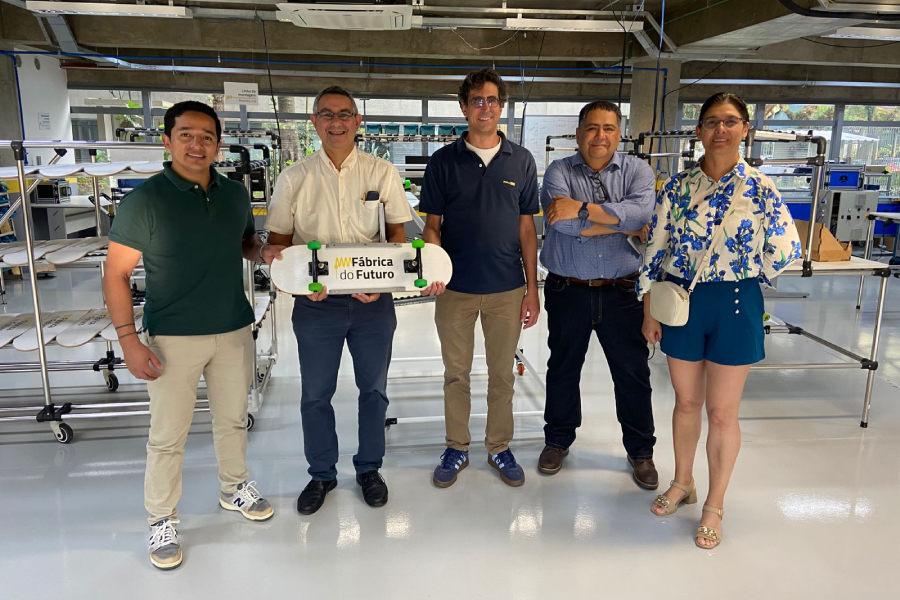
The UFRO delegation, comprising Dr Ania Cravero and Drs Erick Scheuermann, Christian Vergara and Jimmy Martínez, carried out a series of initiatives aimed at strengthening academic and student mobility, as well as joint work in the fields of innovation, entrepreneurship and artificial intelligence (AI). During the visit, they held meetings with key actors within USP’s innovation, entrepreneurship and AI ecosystem, including the Observatório de Transformação Digital of the State of São Paulo, InovaUSP, AUSPIN, the Oficina de Transformação Digital IA, and also visited the Fábrica do Futuro, a space dedicated to the development of entrepreneurial initiatives and innovative production lines. This provided an in-depth understanding of institutional models for innovation and advanced training in entrepreneurship and artificial intelligence.
UFRO–USP: Student Entrepreneurship
One of the central axes of the delegation’s agenda was to advance international cooperation between both universities, driven by UFRO’s International Office and Student Development Office. The initiative seeks to strengthen student competencies in innovation and entrepreneurship, with a particular emphasis on artificial intelligence, addressing opportunities and challenges in an interdisciplinary manner and from a global perspective.
In this regard, Dr Erick Scheuermann noted that progress had been made in defining a conceptual framework for international cooperation focused on student competencies. A model based on ‘junior enterprises’ has also been identified, alongside the potential incorporation of international benchmarks such as the ENACTUS network, through which students are encouraged to develop projects with positive social and environmental impact.
In the short term, this international cooperation will continue its design phase in collaboration with USP counterparts. This work will reach a further milestone in May, with the visit to UFRO by the Director of Academic Mobility at USP, Dr Paulo Braz-Silva.
Strategic international engagement
The linkage and joint work between both institutions has been ongoing and highly productive. On this occasion, the UFRO delegation assessed the work undertaken as both successful and strategic, highlighting the importance of positioning the Universidad de La Frontera as an active partner in the co-construction of new institutional units, following its invitation to participate in the International Institute of Innovation (I3), created in March 2026 by the Office of the Rector at USP to centralise international innovation efforts.
Dr Ania Cravero particularly emphasised the advances observed in the institutional development of artificial intelligence at USP, which provide UFRO with greater clarity regarding the guidelines required for its own implementation. ‘The USP experience demonstrates the importance of having a dedicated structure, such as an office responsible for managing institutional AI needs, as well as an AI Centre capable of articulating collaboration with industry, research and development with societal impact. Both elements represent key benchmarks for strengthening these capacities at UFRO.’
Another relevant aspect relates to gaining first-hand insight into USP’s institutional model for digital transformation and artificial intelligence, as well as the opportunity to work towards the design and implementation of a similar unit at UFRO.
Drs Erick Scheuermann, Christian Vergara and Jimmy Martínez also visited the Escola Superior de Agricultura Luiz de Queiroz at USP, in Piracicaba, within the framework of two FAPESP–UFRO research projects. There, they met with counterparts led by Dr Severino de Alencar and Dr Alan Sartori, both from the Department of Food Science and Technology at USP.
More than two decades of academic cooperation connect these two Latin American universities. This collaboration reaffirms UFRO’s commitment as an international campus dedicated to opening opportunities for academic enrichment and contributing to the global challenges of higher education.
Jassna Sepúlveda Beltrán
UFRO International Office